
Coffee should
surprise you.
One story, read from beginning to end — from why we started to the painting on the bag in your hands.
Less, but better.
Flying Frog exists to showcase coffees with personality. We buy a small number of lots each season, choose the farmer first and the cup second, and give every lot the attention it deserves.
We look for coffees you would recognise blind: a clear character that keeps developing in the cup as it cools, opening layer after layer, and finishes on a quiet wow. Coffee earns the name specialty once it cups above 80 points; the lots we keep sit above 86.
Roasted in Amsterdam,
on electricity.
Our roaster is 100% electric, powered end to end by renewable energy. Batches are small enough that a single profile can be revisited from one morning to the next.
We roast every coffee as a light roast, to highlight its origin and character rather than the fire. Every lot is best enjoyed as filter; if you would like a lot roasted for espresso, leave a note with your order and we will roast it for you.
A fair price for people
we can call by name.
Sourced directly from the farmer. We agree each lot’s price with the producer and build our retail price from what that coffee cost at origin—not from a generic market tier. Better work should earn a better price.
We choose the farmer before the lot. Relationships come first — repeat harvests, honest conversations and a standing invitation to tell us what the season was actually like.
Origins move through the roastery as the coffee is ready, not by the calendar — what is landing now, and what comes next, is below.
№ 04 — Current & next
A rotation by country, not by calendar.
We move between origins when a coffee is ready — cupped, approved and roasted. No fixed months, no forced release dates. What is in the roastery today, and what is coming next.
- In the roastery now
El Salvador
Santa Ana
Rodolfo Ruffatti
Finca El Salvador — El Borbollón, San Antonio, Las Cruces
Three farms on the slopes of the Ilamatepec volcano. Volcanic andosol, native shade, and an experimental fermentation lab in its fifth harvest.
- In the cup
- Round, Sweet, Layered
- Varieties
- Red Bourbon, Pacamara, Anacafe 14 / Parainema, Name Unknown
- Processes
- Macerated natural, Orange-juice co-ferment, Clean natural
- In the roastery now
Colombia
Tolima · Huila · Caldas · Risaralda
Carmenza Monsalve and smallholder partners
Finca La Primavera and smallholder lots across four departments
Four lots from four departments — a rum-barrel washed Castillo run by Carmenza Monsalve at Finca La Primavera, an anaerobic honey blend of microlots, a floral Papayo natural, and a sugarcane decaf from Risaralda.
- In the cup
- Bright, Floral, Complex
- Varieties
- Castillo, Caturra & Colombia, Papayo
- Processes
- Washed, Anaerobic honey, Rum barrel post-processing, Natural, Sugarcane decaf
Stage № 01
At origin
Harvest
Santa Ana, El Salvador
Cherries are picked ripe, by hand, over eight to ten passes across the season.
Pickers move through the same trees every ten to fourteen days. Only cherries at optimum brix are taken; the rest are left to ripen. Each pass is weighed at the collection point and logged against the block it came from — the first step in the lot's traceability chain.
№ 05 — Farmer-first
We pick coffee by the farmer, not by the catalogue.
Each release begins with a person we can call by name — a grower whose farm we know, whose family we have met, and whose harvest we follow year to year. These are the people currently on the shelf and next in line.
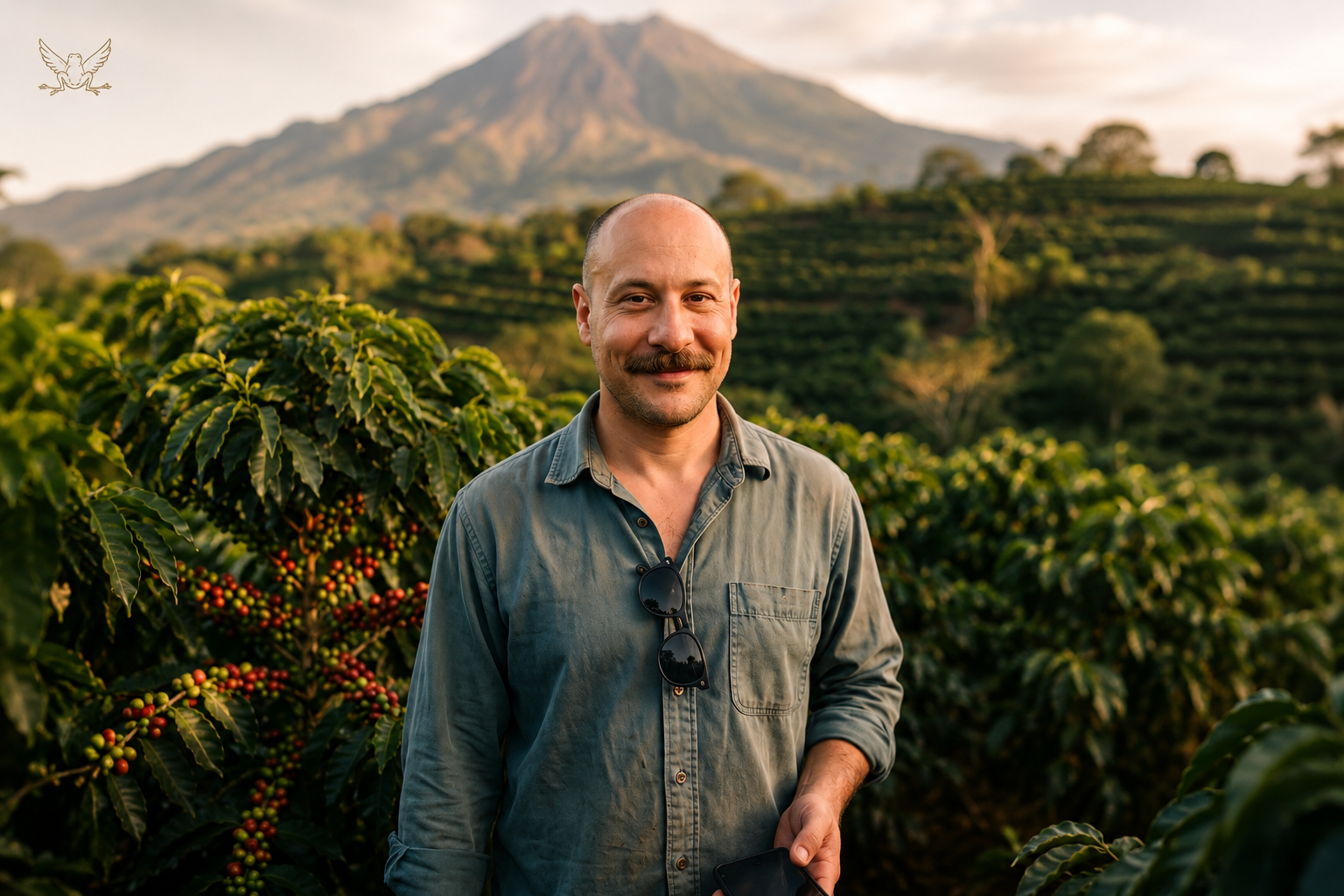 № 01On first-name terms
Ask for
Rodolfo
Rodolfo Ruffatti
- Farm
- Finca El Salvador · El Borbollón · San Antonio · Las Cruces
- Origin
- Santa Ana, El Salvador
- At the farm
- Three farms · one family
Their story
Rodolfo works high above the Santa Ana valley, where he approaches coffee processing as a design discipline. Alongside each harvest, he runs fermentation trials and a plant-breeding programme — the source of several of our most unusual lots.
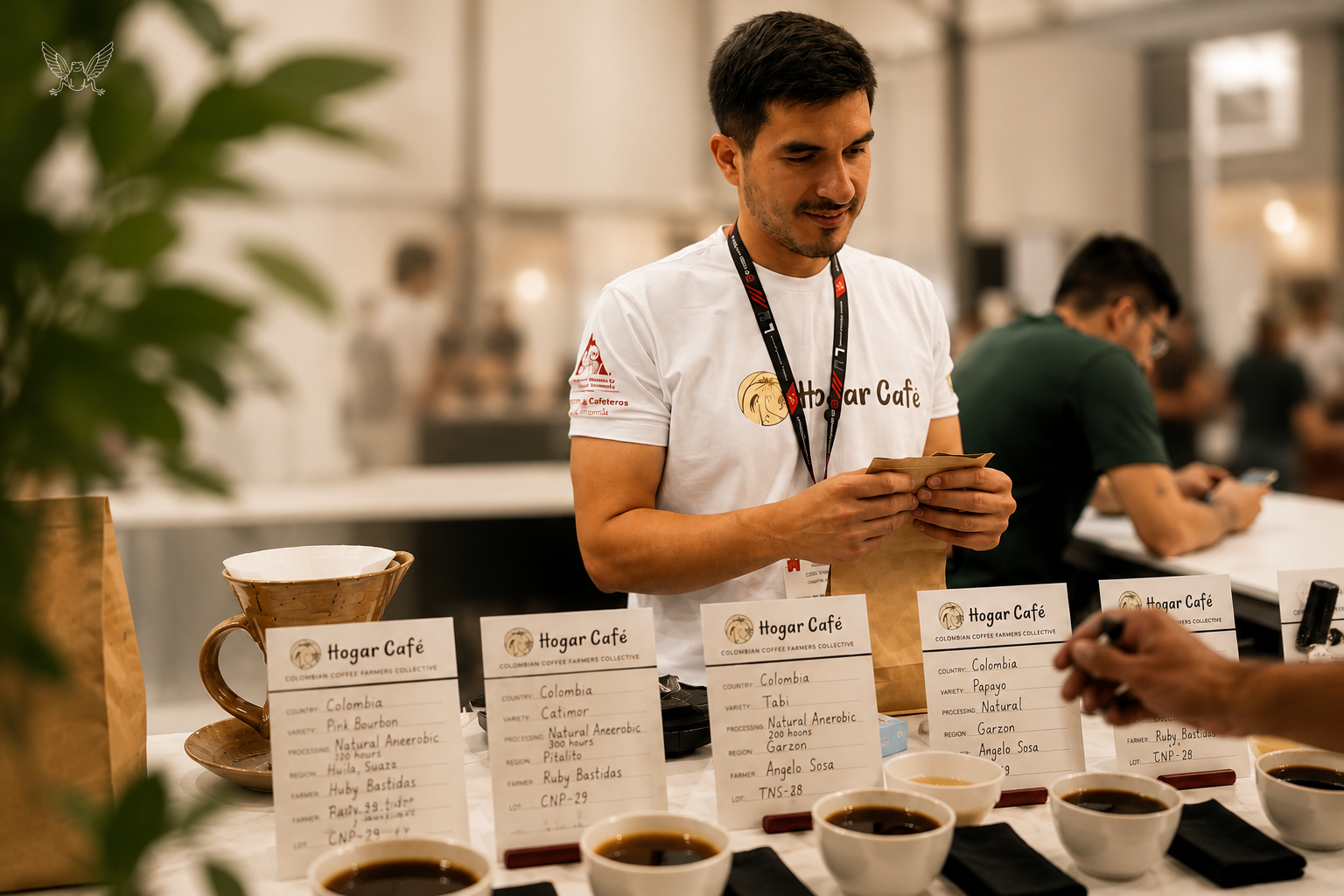 № 02On first-name terms
Ask for
Josué
Josué Valencia
- Farm
- Finca Pachamama
- Origin
- Arabia, near Pereira · Risaralda, Colombia · 1,450 masl
- At the farm
- Family farm · Ruby and Gabriel on the drying beds
Their story
Pachamama is a family farm near Pereira. Josué works with Ruby and Gabriel, following each lot from the trees to the drying beds. Our Zenafina is washed there before its sugarcane decaffeination.
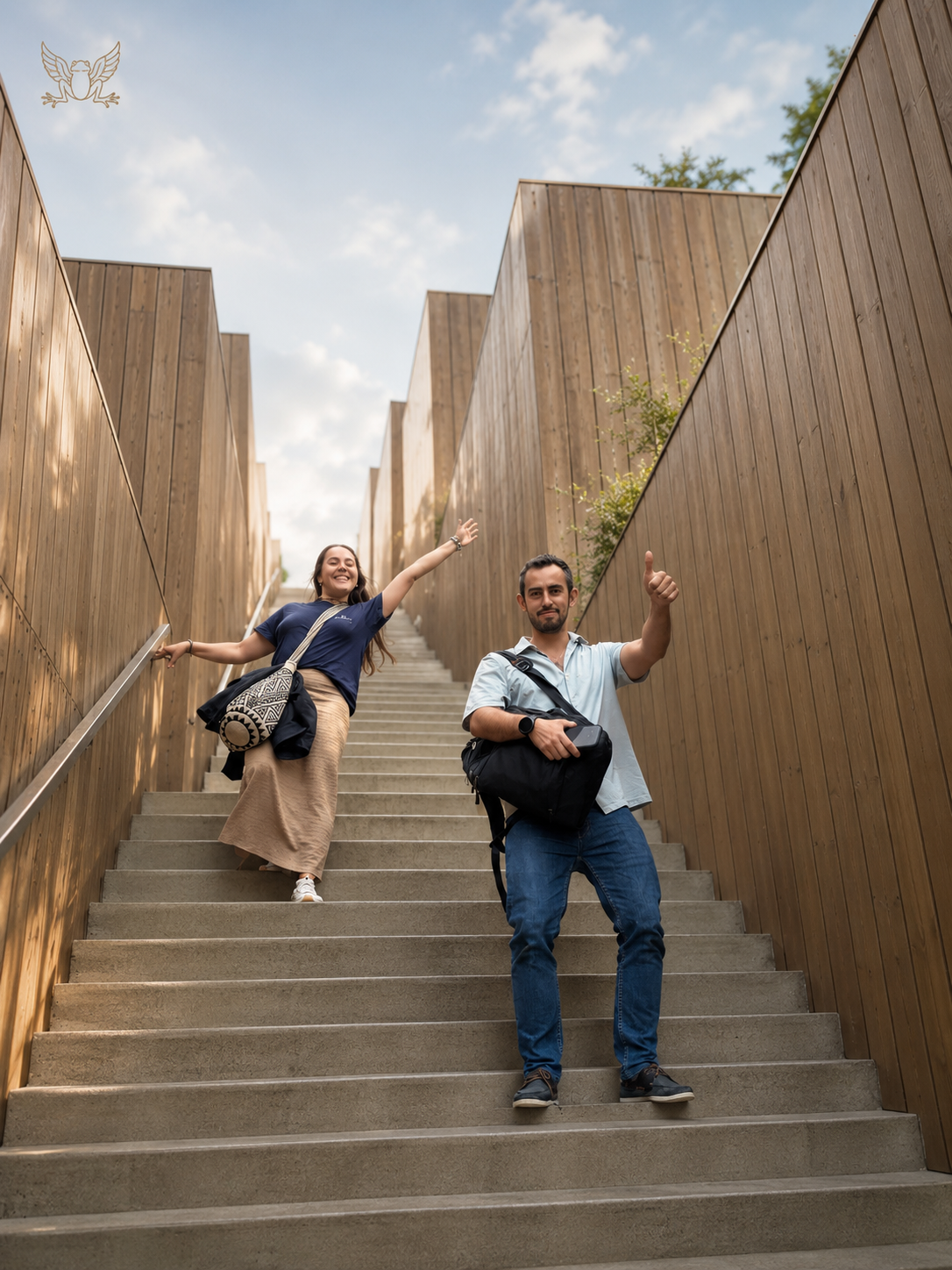 № 03On first-name terms
Ask for
Shady
Shady Bayter
- Farm
- El Vergel Estate
- Origin
- Nevado del Ruiz slopes · Tolima, Colombia · 1,200–1,900 masl
- At the farm
- Bayter family since 1995 · coffee since 2006
Their story
The Bayter family began farming in 1995. Shady now leads one of Colombia’s most inventive coffee-processing programmes at El Vergel, testing controlled fermentations and translating the best of them into expressive, repeatable cups.
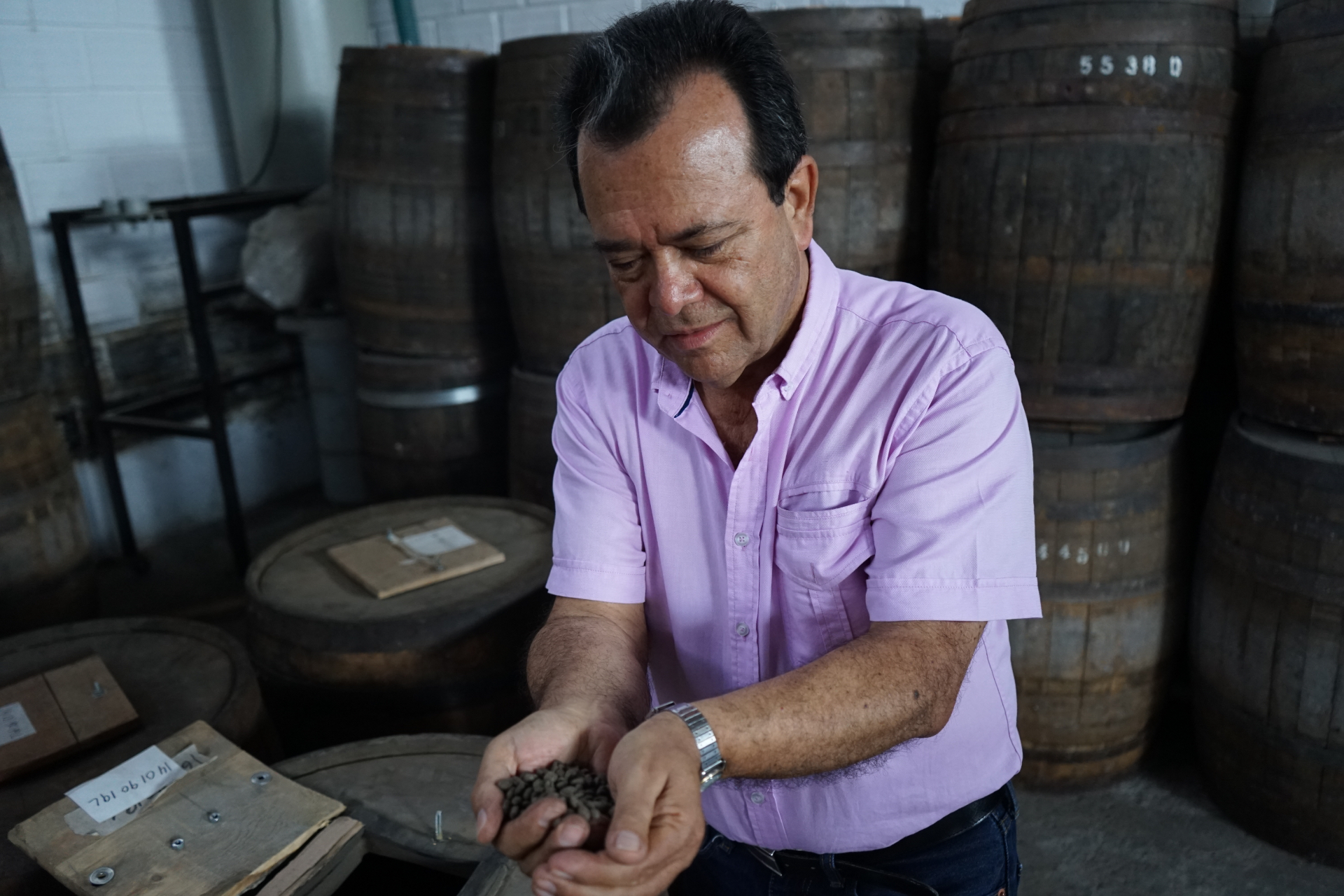 № 04On first-name terms
Ask for
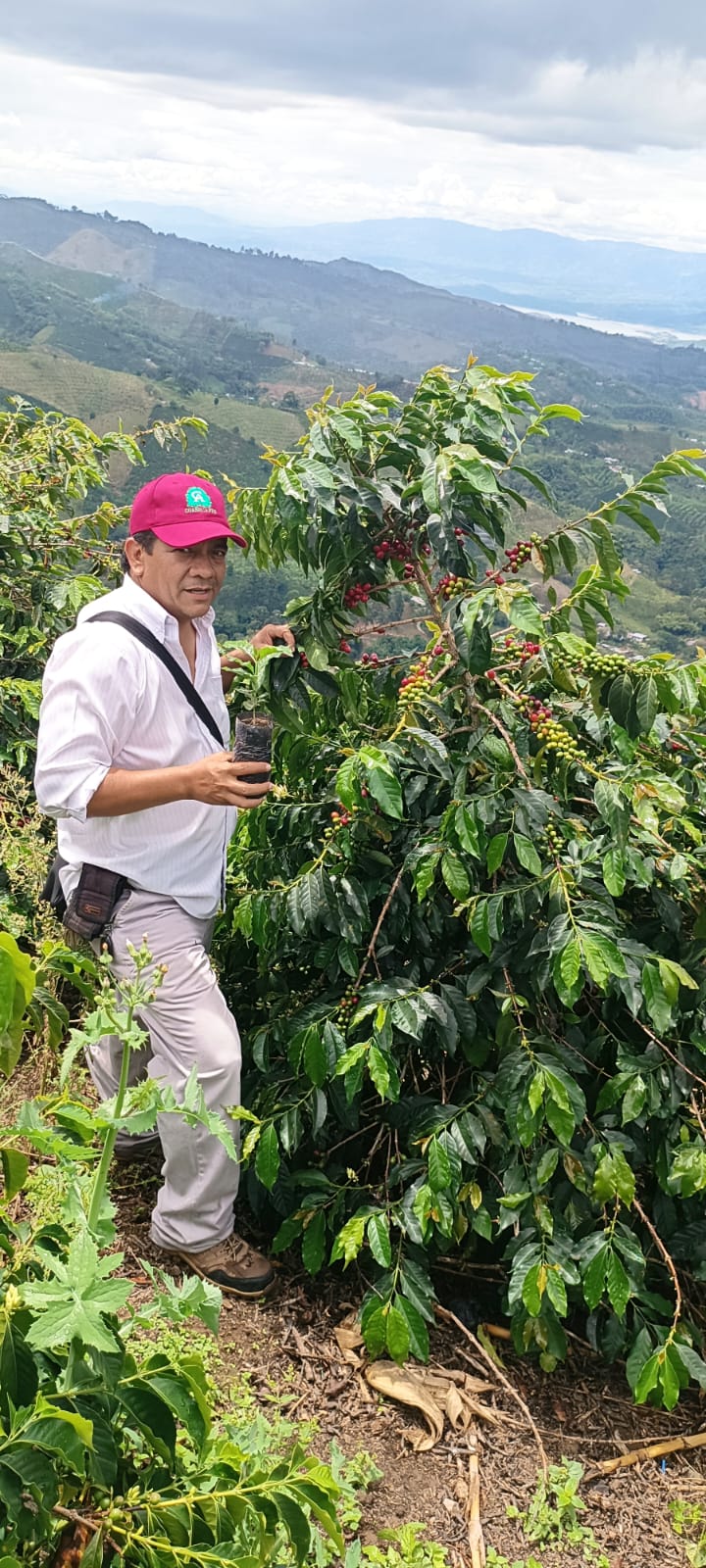
Carmenza
Carmenza Monsalve
- Farm
- Finca La Primavera
- Origin
- Chinchiná · Caldas, Colombia · 1,650 masl
- At the farm
- Carmenza runs the farm and its barrel-ageing protocol
Their story
Carmenza and her late husband, Don Guillermo Álvarez, developed their rum-barrel coffee together at Finca La Primavera. Today she chooses each lot, oversees its time in oak and decides when it is ready to leave the barrel.
 № 05On first-name terms
Ask for
Angelo
Angelo Sosa
- Farm
- Finca Altocielo
- Origin
- Huila, Colombia · 1,700 masl
- At the farm
- Rare Papayo grown on the high slope
Their story
Angelo grows the rare Papayo variety at Altocielo, 1,700 metres above sea level in Huila. The ripe cherries are carefully selected, naturally processed and dried on raised beds.
Coffee Library
Every coffee from these producers is kept in the Coffee Library — artwork, story and notes.
Quiet choices,
repeated.
We roast electric only — a Stronghold and a Link, both running on 100% green energy. No gas burner, no flame. The full picture, from sourcing to what we do with the chaff, is on the sustainability page.
Our packaging is fully recyclable: a mono-material bag, unbleached cardboard boxes, paper tape. Nothing in the parcel needs to be separated by hand before it can be recycled.
Everything we can source close to home, we do — packaging, print, materials and services. Where a local partner can do the job, we would rather work with them. If that sounds like you, get in touch.
We are currently looking for a genuinely sustainable way to recycle our chaff — the papery skin that lifts off the bean during roasting. Stay tuned.
At home, the best thing to do with your used grounds is compost them: the nitrogen and minerals are excellent for plants. And if you want to go further down the rabbit hole, spent grounds can be fermented and distilled into a spirit, among a dozen other lives after the cup. How to recycle coffee
It means that when we buy, we become partners with the growers rather than simply consumers of what they produce. We buy from people we know by name, on terms we agree together, without a spot-market list in between. We intend to visit every farm we work with, cup every pre-shipment sample in Amsterdam, and build each release lot by lot. The relationship continues after the container leaves: feedback on the cup travels back, and the next harvest is planned together.
Human made,
human paid.
Every release begins with an original oil painting made in response to the coffee inside the bag. Every cover is painted by hand, in oil, by an artist we pay for it.
A part of every bag sold goes to the artist who painted it. Meet the artist
Next step
Taste the difference at the bench.
Our Amsterdam workshops work through these same light-roasted lots — cupping, grind, water and timing, until the cup is repeatable.
Explore training