 Flying Frog / The Brew Book
Every cup has a way in.
Ways to meet a coffee. Start where you like it — short and intense, or long and quietly unfolding.
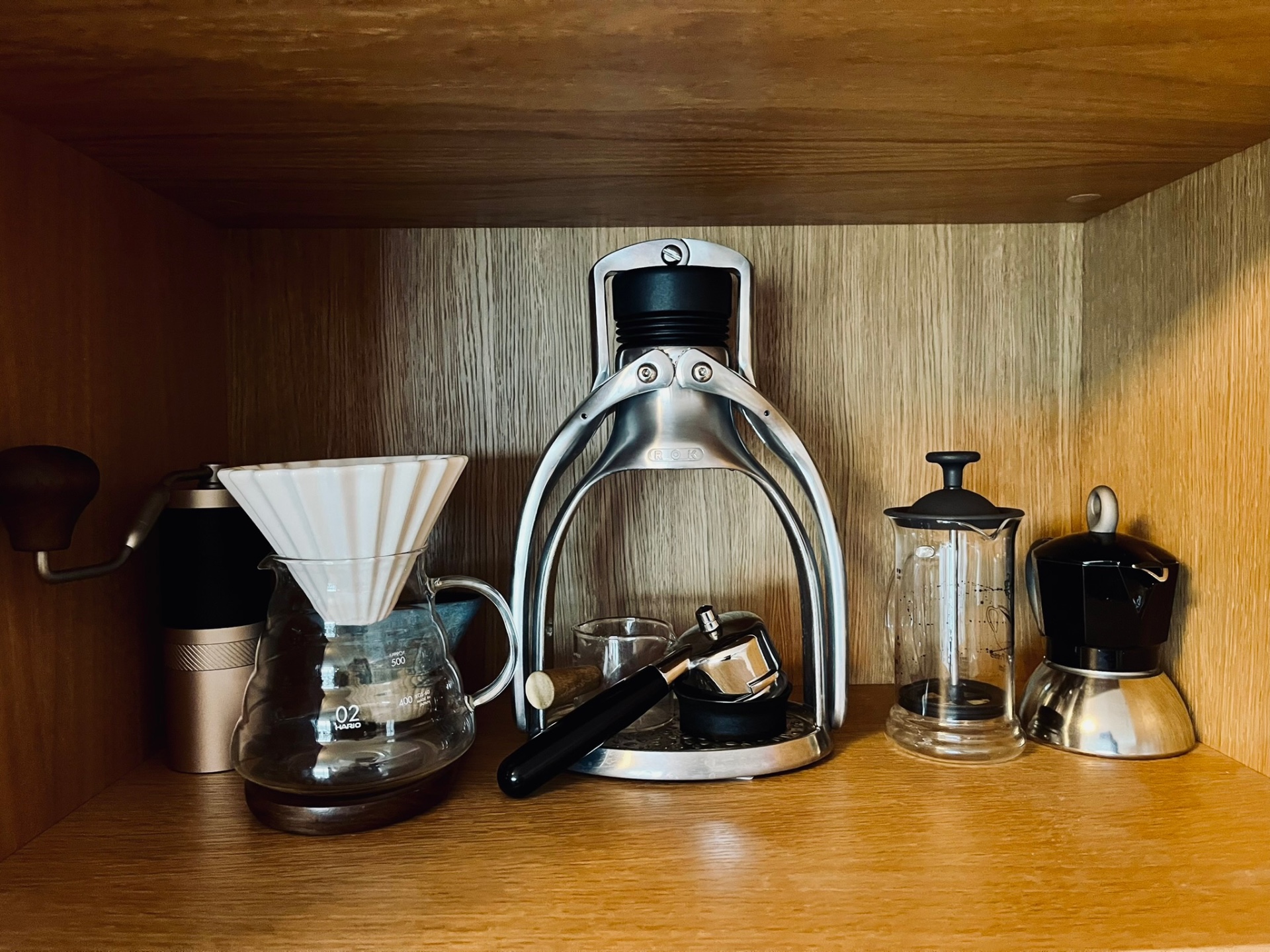
Before you brew
What matters most.
Coffee is about 98% water. Grind, water and filter decide most of what reaches the cup — the recipe only guides them.
IGrind sizeFiner extracts faster, coarser extracts slower.
- Finer grounds have more surface, so water pulls flavour out quickly and drains slowly. Too fine: bitter, dry, harsh, and the brew stalls.
- Coarser grounds extract less and drain faster. Too coarse: sour, thin, watery, and the brew runs through quickly.
- Taste first, then adjust one step at a time: sour or hollow → go finer; bitter or drying → go coarser. Change only grind while keeping dose, water and time the same.
- Rough guide: espresso fine (like flour-salt), moka and AeroPress fine-medium, V60 and ORIGAMI medium-coarse, Chemex coarser, French press and cold brew coarse (like sea salt).
- Grind just before brewing. Ground coffee loses aroma within minutes. A burr grinder gives even particles; blade grinders make dust and boulders, which taste bitter and sour at once.
IIWater qualitySoft, clean, lightly mineralised water.
- Aim for roughly the SCA target: about 150 ppm total dissolved solids (75–250 is acceptable), hardness around 50–175 ppm as CaCO₃, alkalinity (buffer) about 40 ppm, pH close to 7, no chlorine or smell.
- Magnesium and calcium help pull out flavour — magnesium tends to lift fruit and sweetness. Bicarbonate (buffer) neutralises acidity: too much makes coffee flat and chalky, too little makes it sharp.
- Good tap water often works well. Let it run fresh, and use a simple carbon filter jug if it tastes of chlorine or the kettle scales quickly.
- Avoid distilled or reverse-osmosis water on its own — with no minerals, coffee tastes empty and sour. Very hard or high-bicarbonate bottled water mutes the cup and scales your kettle.
IIIRemineralisingBuild your own water from a clean base.
- Start with distilled or RO water and add a brewing mineral sachet or concentrate (for example Third Wave Water, Lotus or Aquacode) following its instructions.
- Home-made: Epsom salt (magnesium sulphate) for extraction and baking soda (sodium bicarbonate) for buffer, mixed as concentrates and dosed by weight.
- Keep it consistent: same water every time makes grind and recipe changes meaningful. Note what you use alongside your recipe.
IVTemperatureHotter extracts more.
- Most filter coffee sits well at 90–96 °C; our standard filter recipe uses 92 °C.
- Lighter, denser roasts like hotter water; darker roasts and decaf often taste sweeter a little cooler. Cold brew trades heat for many hours.
- Water off the boil drops a few degrees within seconds — a variable-temperature kettle removes the guessing.
VPaper filtersRinse, choose the right shape, keep it clean.
- Always rinse the paper with hot water before adding coffee. It washes out paper taste and warms the dripper and server. Pour the rinse water away.
- Shape changes the flow: cone filters (V60-style) drain faster and give clarity; flat-bottom/wave filters (Kalita-style) drain more evenly and taste rounder. The ORIGAMI takes both.
- Thicker paper (Chemex) holds back more oils for a very clean cup. Metal or cloth filters let oils through for more body.
- Store filters sealed and away from smells — paper absorbs odours from the kitchen.
VIRatio, freshness & toolsWeigh it, rest it, keep it clean.
- Use a scale. Volume scoops vary a lot by roast and grind. Our filter starting point is 16 g coffee to 250 g water (about 1:15.6).
- Freshly roasted coffee needs rest to release gas — some lots, like our El Salvador coffees, open up after a few weeks. Store beans airtight, cool, dark, and never in the fridge.
- Rinse brewers and servers after use and descale the kettle regularly; old coffee oils and limescale both taste.
Find your cup
From concentrated to delicate.
Ratios compare coffee to brewing water, except espresso, which uses the drink in the cup. Cold brew is a concentrate to dilute; the order is a guide, not a strength rating.
- № 01EspressoSmall, concentrated and precise.1:2–2.2
- № 02Moka PotFull, aromatic and made for a small cup.~1:9
- № 03DjezveIntense, velvety and unfiltered.1:9.3
- № 04Cold BrewSlow-steeped, smooth and made to dilute.1:10 concentrate
- № 05AeroPressSoft, rounded and ready wherever you are.1:16
- № 06French PressGenerous, textured and unhurried.1:16.7
- № 07V60Clear, bright and quietly layered.1:15.6
- № 08ChemexDelicate, clean and made for sharing.1:16.7
Good water, freshly ground coffee, a scale. The numbers are a place to begin; your taste has the final word.