
№ 02
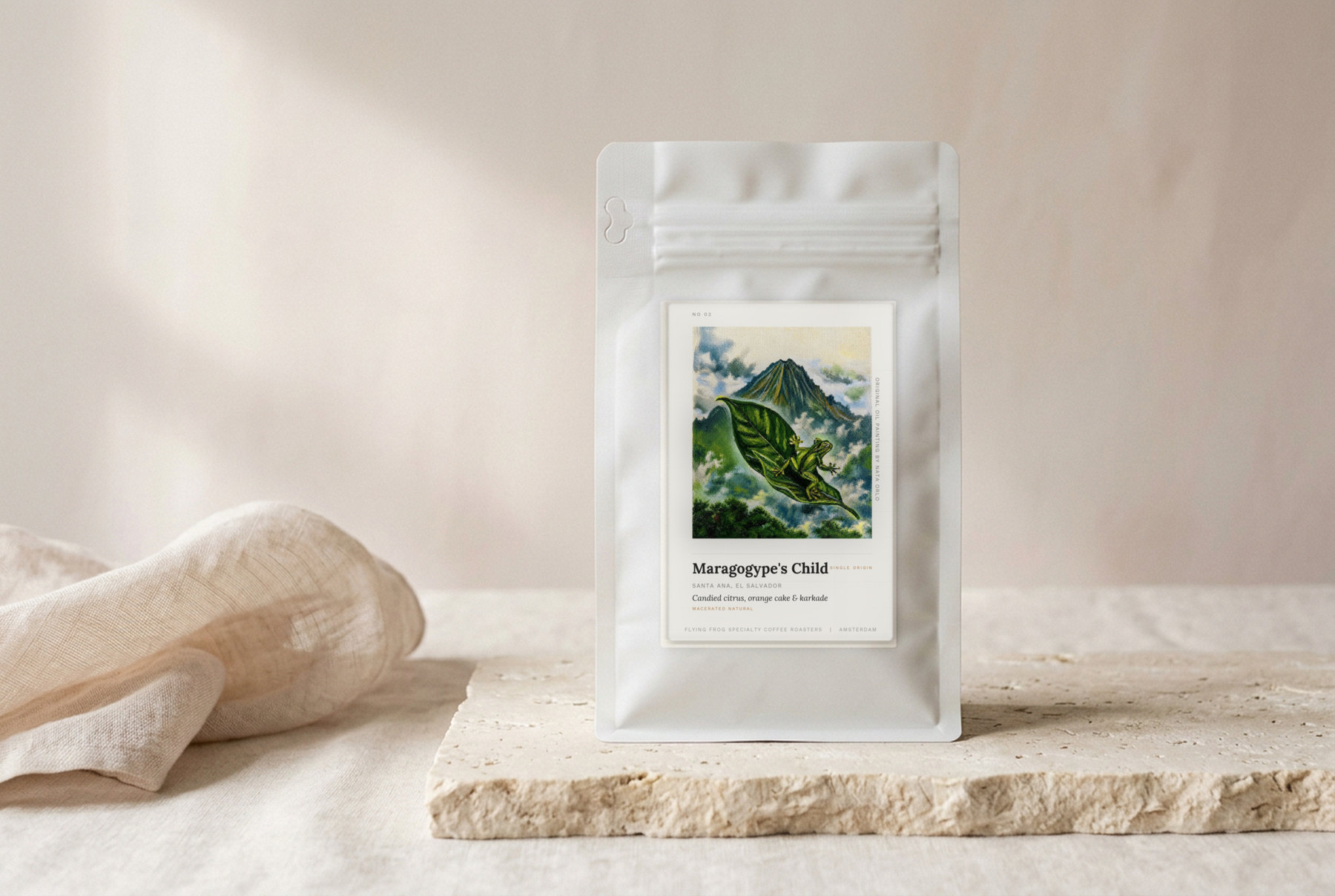
Maragogype's Child
Candied Citrus, Orange Cake, Karkade
Macerated Natural
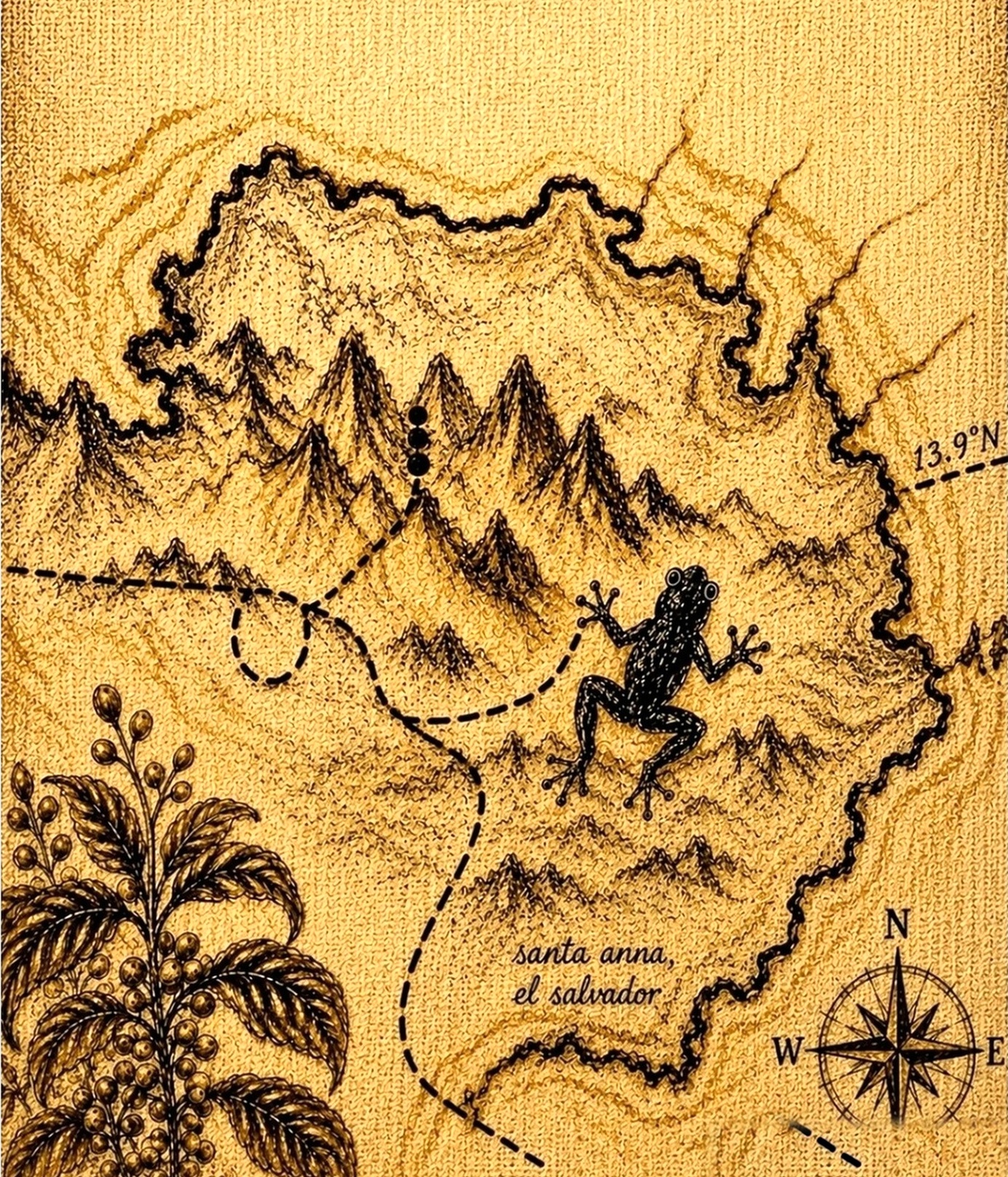
Rodolfo Ruffatti · Cerro El Aguila, Santa Ana Region, El Salvador
€12.69
100 g · Whole bean · Light roast
Roasted to order in Amsterdam
These are roasted light for filter. If you would like them roasted for espresso or an omni profile, please drop us a note here — we roast to order.
Secure checkout · iDEAL, card, PayPal, bank transfer
Every Flying Frog coffee is available only while the lot lasts. Once it is gone, it is gone — we celebrate single harvests rather than permanent blends.
Roasted light in Amsterdam on electric machines running on 100% green energy, from a named producer — Rodolfo Ruffatti. How we choose
№ 01
Frog Facts
- Macerated Natural — The whole cherries rest in a sealed, temperature-controlled ferment before drying — slower, deeper fruit and more complexity in the cup.
- Grown at 1550 masl, where cherries ripen slowly and concentrate sugar.
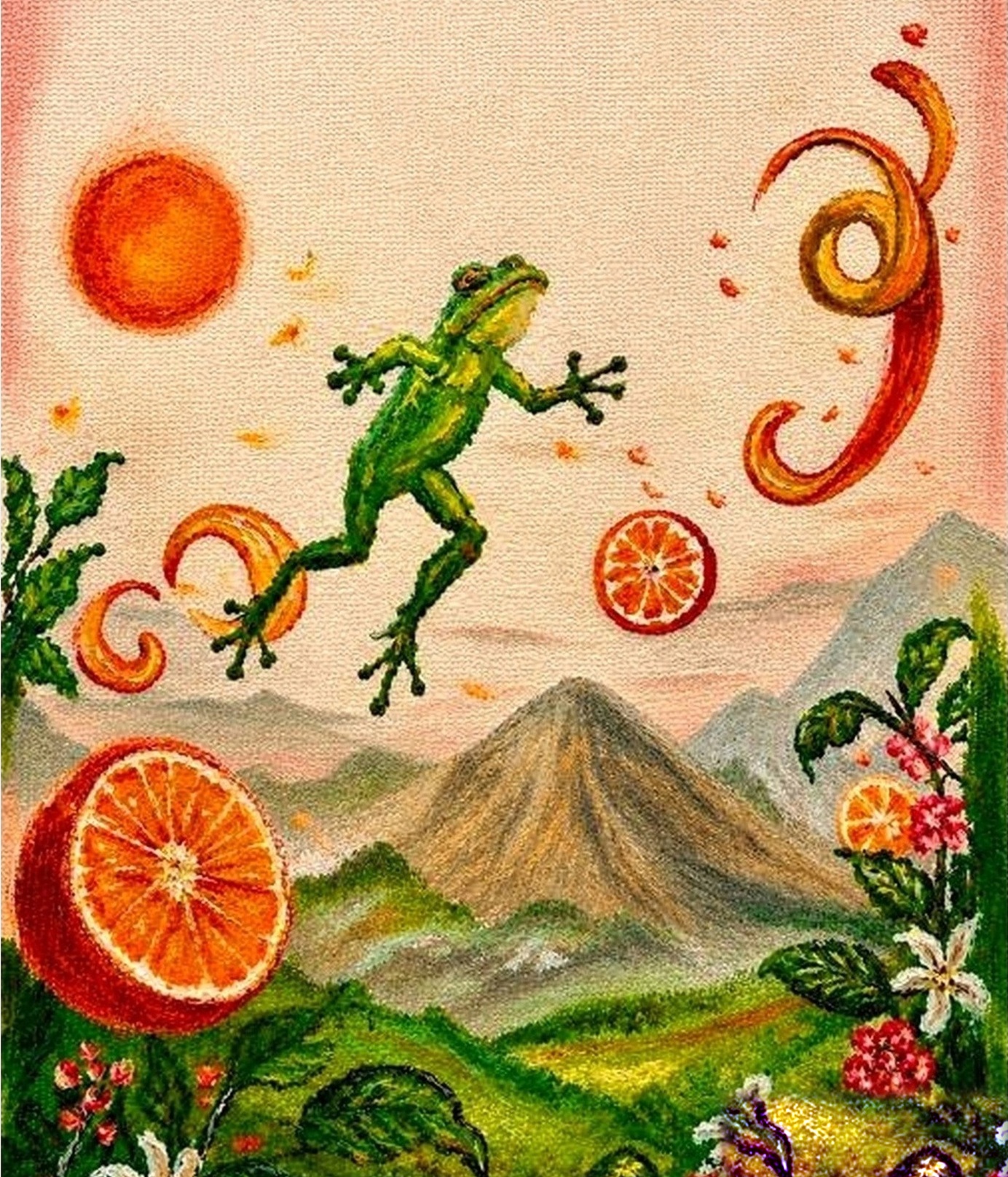
- Original artwork, painted for this release — a share of every bag returns to the artist.
№ 02
The Story
Rodolfo Ruffatti,
Finca El Salvador.
FES Pacamara Bronze: this is one of the Pacamaras grown on our farm. Pacamara is an unfinished variety — it still displays variations. Some plants look more similar to one of the parents.
The Collection
Learn this recipe in person
Brew it beside us in Amsterdam.
Our Home Brewing workshop works through these same light-roasted lots — grind, ratio, water and timing, until the cup is repeatable.
See the workshops№ 04
In the cup
A one-minute tasting guide.
Candied citrus, orange cake, karkade
First impression, before the first sip — poured, swirled, and smelled at the rim.
- Candied Citrus
- Orange Cake
№ 05
Origin
Coffee belt · 23.4°N — 23.4°S
Read about the coffee beltCountries of the coffee belt+
Central & North America
- Mexico
- Guatemala
- Honduras
- El Salvador
- Nicaragua
- Costa Rica
- Panama
- Cuba
- Dominican Republic
- Haiti
- Jamaica
South America
- Brazil
- Colombia
- Peru
- Ecuador
- Bolivia
- Venezuela
Africa & Arabia
- Ethiopia
- Kenya
- Tanzania
- Rwanda
- Burundi
- Uganda
- Yemen
- Malawi
- Zambia
- Zimbabwe
- Cameroon
- Côte d'Ivoire
- Madagascar
Asia & Pacific
- India
- Indonesia
- Vietnam
- Laos
- Thailand
- Philippines
- Papua New Guinea
- China
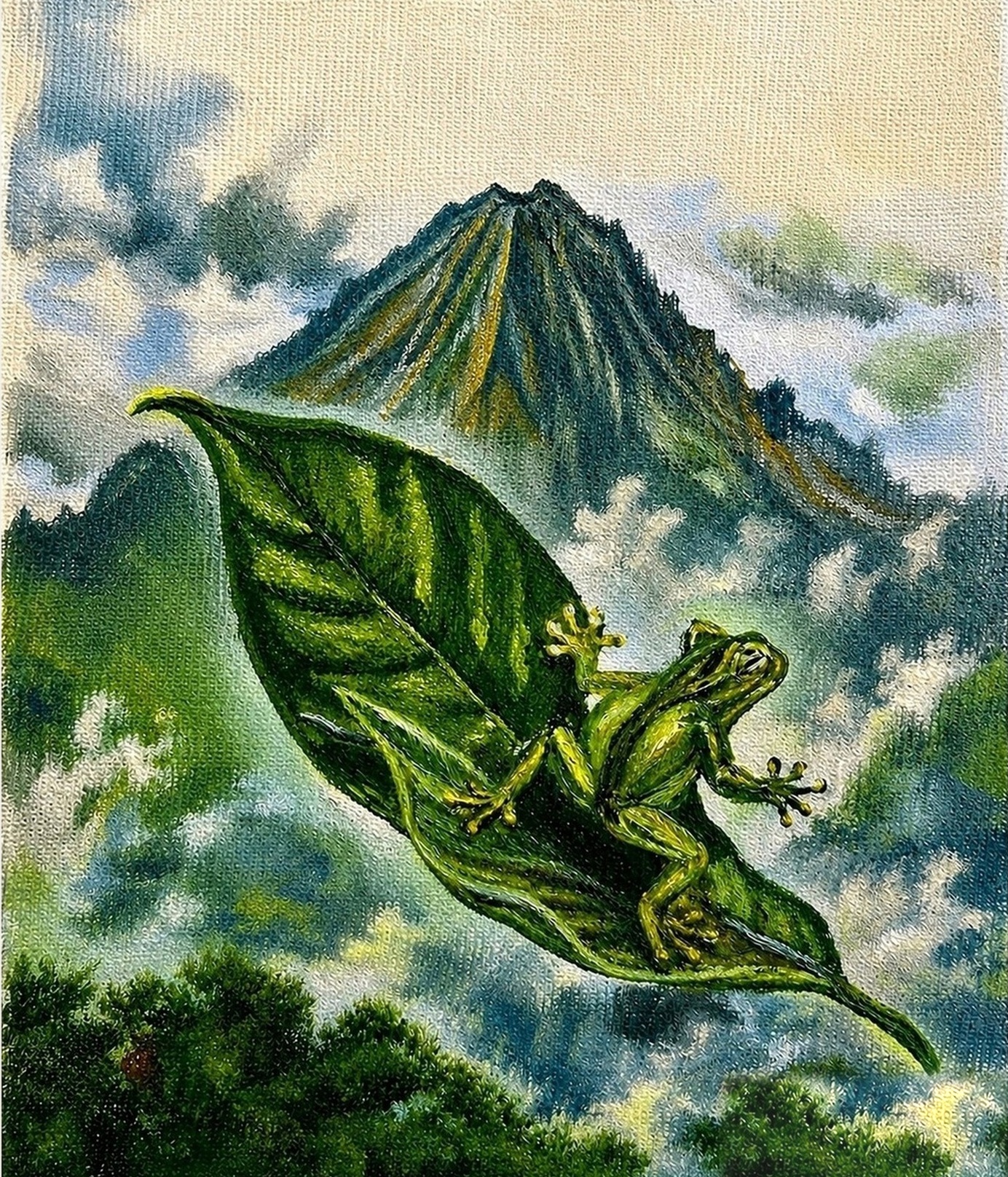
One painting,
made for this coffee.
An original oil painting by Nata Orlo, made in response to Maragogype's Child — never a graphic, never repeated. A share of every bag returns to the artist.
Also on the wall
Maragogype's Child — Print
Signed giclée print of the cover painting — the artwork on the bag, at wall scale.
№ 06
Beyond the cup
What this coffee helps support.
Roasted on 100% green energy
Every lot is roasted in small batches on an electric roaster in Amsterdam, powered entirely by green electricity.
Fully recyclable packaging
Mono-material bags, unbleached cardboard and paper tape — the whole parcel can be recycled.
Direct producer relationships
We buy through relationships we can name, and we return to the same farms.
Original artwork, commissioned
Each release is painted by an independent artist who shares in every bag sold.
Continue reading
All coffees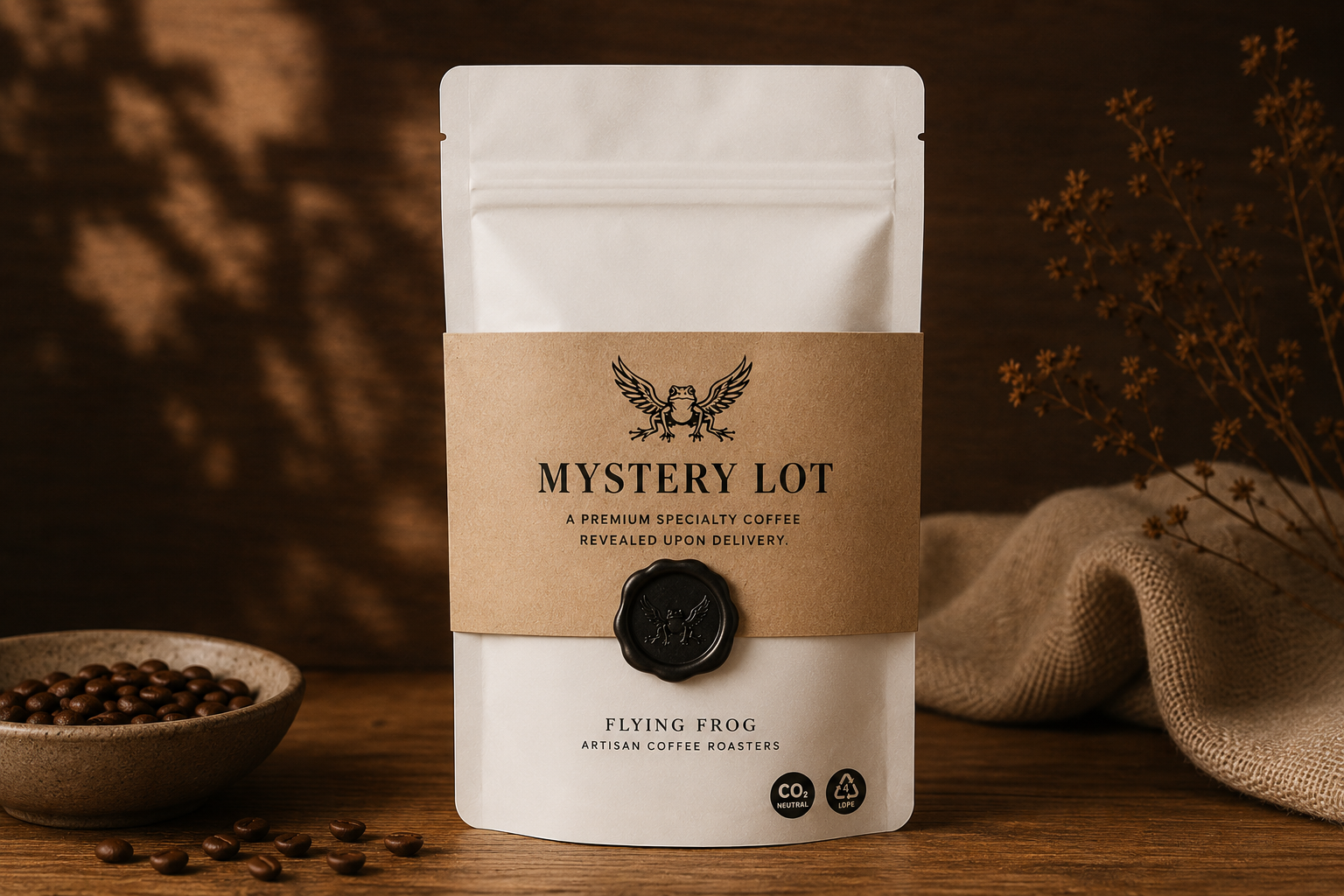
Every coffee we have ever roasted — artwork, producer, story and notes, kept.Coffee Library →